For Small Business
3,000+ Integrations. Why Stop at Home?
Home Assistant was built for homes — but everything that makes it powerful there works just as well in your office, shop, or studio. Automate lighting, HVAC, access control, security, and more, without expensive proprietary systems or monthly subscription fees.
If you already run Home Assistant at home, you already understand the platform. Bringing it into your business is a natural next step.
The integrations already exist.
Home Assistant has over 3,000 official integrations covering lighting, climate, security, energy, AV, networking, and more. Most of the equipment already in your business is supported — you just need someone to connect the dots.
Lighting Automation
Office Lighting, Done Right
Lighting is one of the highest-impact, lowest-effort places to start with business automation. Occupancy-based lighting alone can cut your lighting energy bill significantly — and your staff won't have to think about it.
Home Assistant can control lights based on occupancy sensors, time of day, and even the amount of natural light coming through the windows. Meeting rooms can light up when someone walks in and dim down automatically five minutes after the last person leaves. Open-plan areas can run on schedules with manual overrides. No more lights blazing in an empty office at 9pm.
Circadian lighting — where colour temperature gradually shifts from cool energising white in the morning to warm amber in the afternoon — is well-supported across major commercial lighting brands including Philips Hue, LIFX, Lutron Caseta, and KNX systems. There's good evidence this improves focus and reduces afternoon fatigue.
Scene control is where it really gets useful. A single button press (or a dashboard tap) sets the boardroom to 'presentation mode' — blinds down, screen-brightness lights off, accent lighting on. Another tap resets to normal. These integrations work across different brands because Home Assistant acts as the unifying layer.
Home Assistant examples

Climate Control
HVAC That Works Around Your Business
Heating and cooling accounts for a significant portion of most small business energy costs. Home Assistant can make your HVAC system significantly smarter without replacing it.
The simplest win is schedule-based control: your office cools down before staff arrive, maintains comfort during business hours, and ramps back when the last person leaves. Home Assistant can automate this based on calendar events, occupancy sensors, or time-of-day schedules — or a combination of all three. If you're working late, a button press or phone tap can extend the cooling window.
Zone control is another big one for multi-room offices. There's no reason to heat the meeting room to 22°C all day when it's only used for two hours. With temperature sensors and smart thermostats or zone controllers, Home Assistant can manage each space independently — rooms warm up before meetings and return to setback mode afterwards.
Home Assistant integrates with most commercial and prosumer HVAC systems, including Mitsubishi, Daikin, Fujitsu, Trane, and Nest. If your unit has a control interface — wired or IR — there's a very good chance there's an integration already built. And unlike proprietary apps, everything is visible in one place.
Home Assistant examples

Energy Management
See and Control What You're Spending
Most small businesses have no idea which equipment is driving their power bill. Home Assistant gives you that visibility — and the ability to act on it automatically.
With smart plugs and energy monitoring clamps, you can see the real-time power draw of individual circuits, machines, or appliances. That server rack that runs 24/7, the industrial coffee machine that draws 2kW every hour, the old air compressor that cycles on in the background — all of it visible in a single dashboard. Most business owners are surprised by what they find.
Once you can see it, you can automate around it. Equipment can be scheduled to power down outside business hours. High-draw devices can be prevented from running simultaneously to avoid demand charge spikes. If you have solar, excess generation can be automatically directed to storage, EV charging, or non-critical loads during peak production hours.
Home Assistant's Energy dashboard gives you daily, weekly, and monthly breakdowns. With tariff data configured, it can estimate cost per device. That kind of visibility makes it much easier to justify investment in efficient equipment, negotiate better energy contracts, and demonstrate your sustainability credentials to customers.
Home Assistant examples

System Automation
Open, Close, and Run on Autopilot
The real power of Home Assistant isn't any single integration — it's the ability to connect dozens of different systems and have them work together. Your business 'open' and 'close' routines can be fully automated.
A morning open routine might: unlock the front door, turn on the lights in reception, set the HVAC to comfort mode, power on the POS system and displays, start the coffee machine, and send a notification to the manager confirming everything is ready. A closing routine does the reverse — and can be triggered by a single button, a voice command, or automatically when the last presence sensor goes quiet.
Home Assistant integrates with AV equipment, digital signage, PA systems, and commercial displays through brands like Sony, Samsung, LG, and via HDMI-CEC control. Want the screens in the waiting area to display the day's schedule when the office opens and switch to screensaver mode after hours? Home Assistant and other DIY smart home tools make this possible.
Because Home Assistant has over 3,000 official integrations, the chances are very good that whatever equipment you already have can be connected. Point-of-sale peripherals, network switches, printers, label makers, refrigeration units, coffee machines — the community has built integrations for an enormous range of commercial equipment that proprietary business automation systems simply don't support.
Home Assistant examples

Security & Monitoring
Business Security Without Monthly Fees
Most commercial security systems lock you into expensive monthly contracts for monitoring that you could run yourself. Home Assistant gives you comprehensive business security with full data ownership and no recurring subscription.
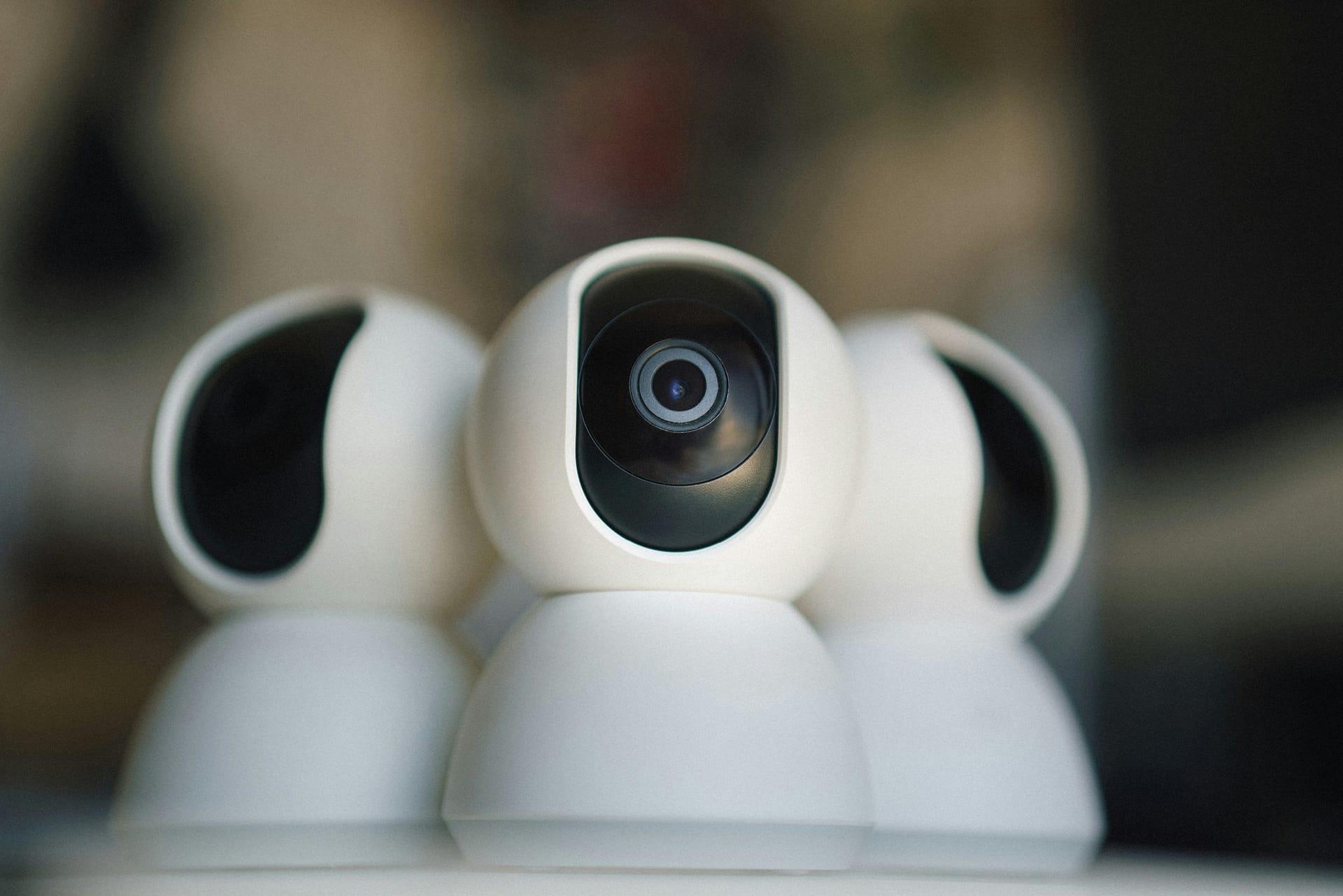
Motion sensors, door and window contacts, and IP cameras (Frigate, Reolink, Hikvision, Dahua, and many others) can all feed into Home Assistant's alarm system. When the office is armed, any motion or entry triggers an alert to your phone with a camera snapshot. You decide the response — not a distant monitoring centre.
Person detection through Frigate's local AI processing means you get alerts that are actually meaningful. A delivery driver at the front door is different from a motion event on a windy night — and Home Assistant can tell the difference. No cloud processing, no subscription, your footage stays on your hardware.
For businesses with multiple locations, Home Assistant can be set up to monitor all of them from a single dashboard. Each site gets its own alarm state, sensor feeds, and camera views — consolidated into one interface. If something happens at the warehouse while you're at the shop, you'll know immediately.
Home Assistant examples
Short-Term Rentals & Hospitality
Airbnbs, Short Term Rentals & Boutique Hotels
Short-term rentals and boutique hotels are one of the best commercial use cases for Home Assistant. Automated guest access, climate control, and energy management directly improve the guest experience while reducing your operating costs.
Smart locks with auto-generated access codes are the starting point. Home Assistant can create unique PIN codes for each booking, synced from your calendar or channel manager, that activate at check-in and expire at checkout. No key handovers, no lockbox combinations — guests get a seamless entry, and you get a full audit trail of arrivals and departures across every property.
Climate control between guests is where the savings stack up. Home Assistant can drop heating and cooling to setback mode after checkout, then bring the property back to a comfortable temperature before the next guest arrives. Multiply that across several properties and multiple turnovers a week, and the energy savings are significant. Occupancy sensors can also confirm vacancy so cleaners know exactly when to head over.
For boutique hotels and multi-room properties, Home Assistant can manage room-level automations at scale. Each room gets its own climate schedule, lighting scenes, and access code — all managed from a central dashboard. Welcome lighting on first entry, automatic scene resets after checkout, and real-time occupancy visibility across the entire property. It's the kind of automation that usually requires an expensive commercial BMS — delivered at a fraction of the cost.
Home Assistant examples
Hear my chat with Jasper about his hotel powered by Home Assistant
Listen to the Episode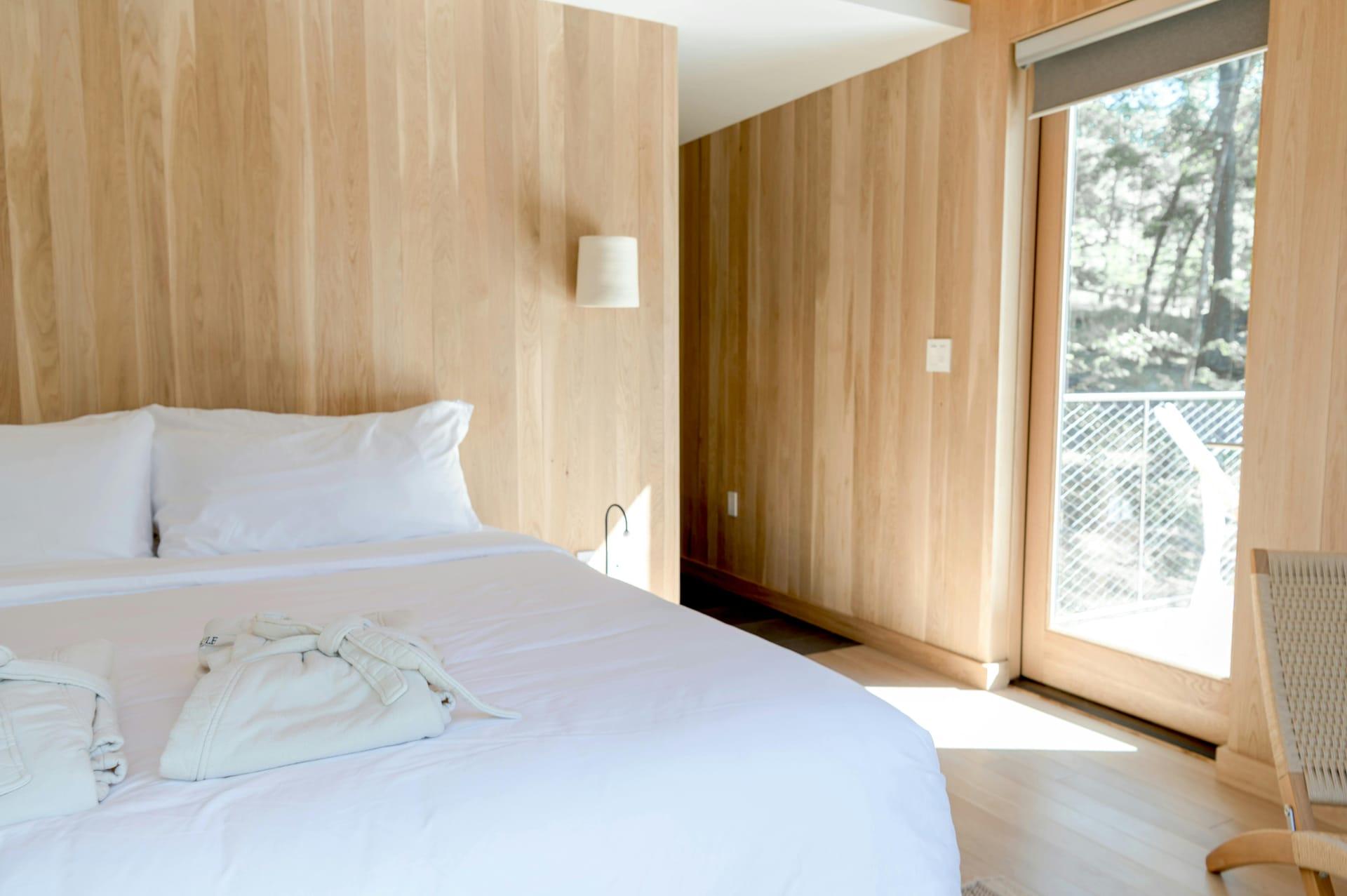
Ready to Automate Your Business?
Book a discovery call and we'll figure out which automations will have the biggest impact for your specific setup — no jargon, no sales pitch, just honest advice.
Book a Discovery Call